L’The American Association for the Advancement of Science (AAAS) embraced Science Diplomacy with the
establishment of the Center for Science Diplomacy in 2008 (Center for Science Diplomacy) and, in 2012, the launch of the journal Science & Diplomacy | An online publication from the AAAS Center for Science DiplomacyThese initiatives followed
the report New Frontiers in Science Diplomacy, published by the UK Royal Society as the outcome of a two-
day meeting with the AAAS (1-2 giungo 2009).
In 2017, Pierre-Bruno Ruffini (Université Le Havre Normandie) published the first monograph dedicated to
Science Diplomacy. In Europe, within the framework of Horizon 2020, the European Commission funded
three research programmes explicitly devoted to Science Diplomacy: Using Science for/in Diplomacy for Addressing Global Challenges (S4D4C), Using Science for/in Diplomacy for Addressing Global Challenges (S4D4C), Inventing a Shared Science Diplomacy for Europe (InsSciDE)The latter drew on historical
analysis to identify actors and dynamics relevant to the present day. The University of Padua took part by
leading the Work Package on Space Diplomacy, in collaboration with the Historical Archives of the
European Union. In 2021, building on these experiences, a network – The European Union Science Diplomacy Alliance – was
established, followed by the first European Conference on Science Diplomacy, held in Madrid on 18–19
December 2023. In 2023, the European Commission launched an internal reflection process on a possible
EU Science Diplomacy strategy, which resulted in a report published in June 2024.
Meanwhile, the Italian government increased the number of its Science Attachés from 22 in 2019 to around
50 in 2024, and in March of the same year established two dedicated offices for Science Attachés and Space
Attachés. This development is a clear indicator of the strengthened attention to Science Diplomacy within
the Italian Ministry of Foreign Affairs and International Cooperation (MAECI), reflected in initiatives such as the Science Diplomacy Portal – Innovitalia –and involving a range of actors, including ministries,
universities, and national research organisations. A significant illustration of this engagement was provided
by the recent panel organised by the Ministry of Education, University and Research at the 2024 Arctic Circle Assemblyin Reykjavík, Iceland (17–19 October 2024), moderated by the Italian Ambassador to
Norway and Iceland, Stefano Nicolettiand featuring contributions from CNR, ENEA, INGV, and the
Hydrographic Institute of the Italian Navy.
It is within this broader context that, thanks to funding from the MIUR FISR COVID 2019 programme aimed
at launching a Master’s degree in Science Diplomacy, the Science Diplomacy Schools at the University of
Padua were developed—now in their third edition(22–26 October 2024)—in collaboration with Roma Tre
University and with the participation of the University of Rome Tor Vergata, CNR, and VIU (Venice
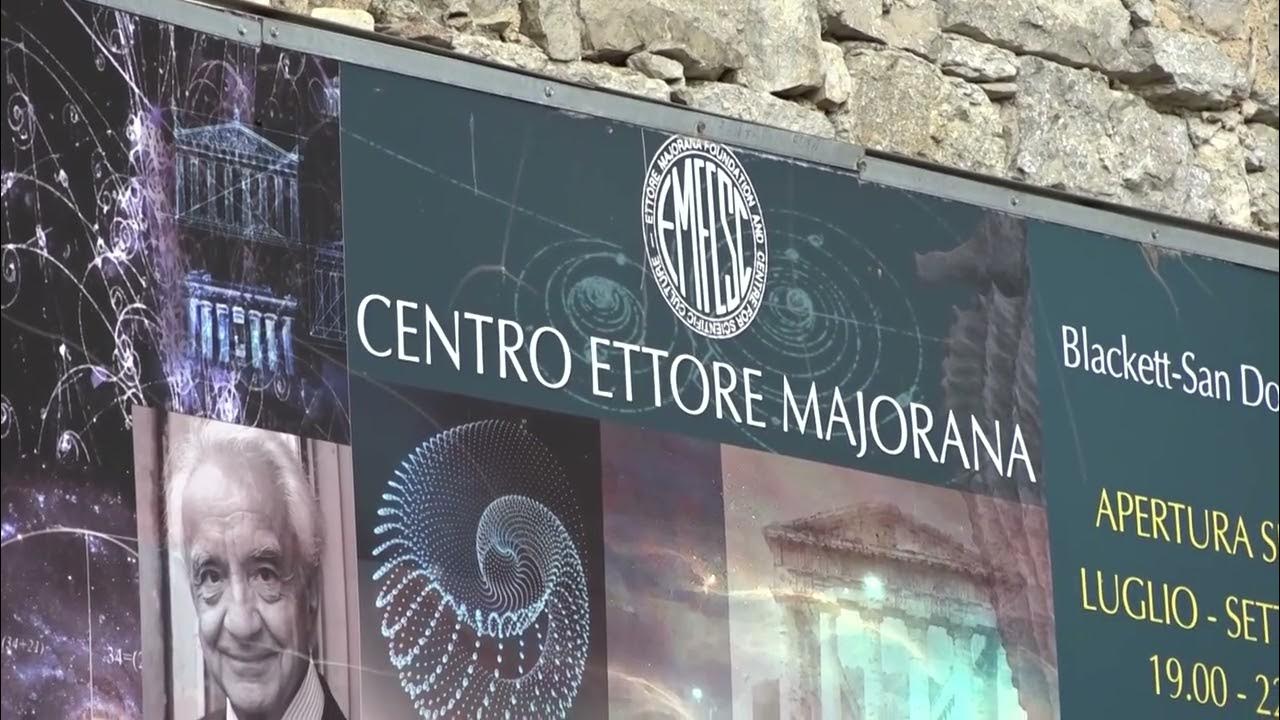
International University). Building on this experience, at the Ettore Majorana Foundation (Erice, Trapani),
founded in 1962 by Antonino Zichichi to foster dialogue among scientists across the Iron Curtain, the
International School of Neutron Science and Instrumentation organised a workshop on Science Diplomacy(2-7 May 2024)which in 2024 gave rise to theInternational School on Science & Diplomacy.
Edited by Professor David Burigana