



STORYTELLING LAB
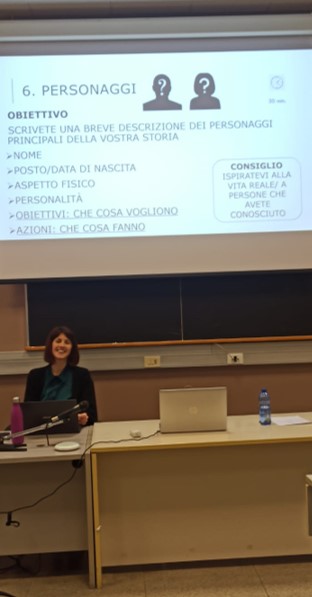
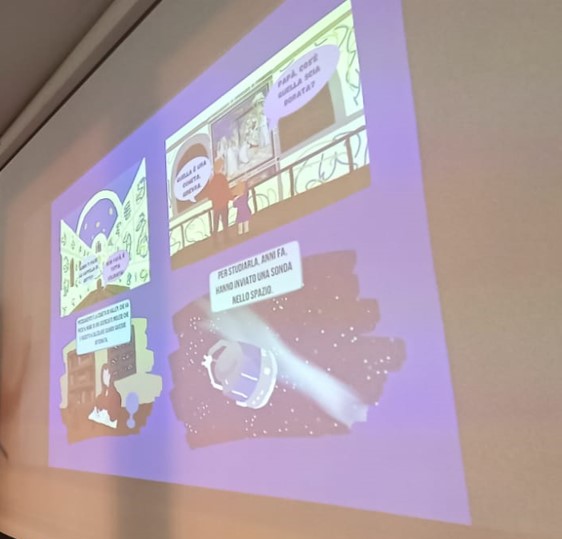
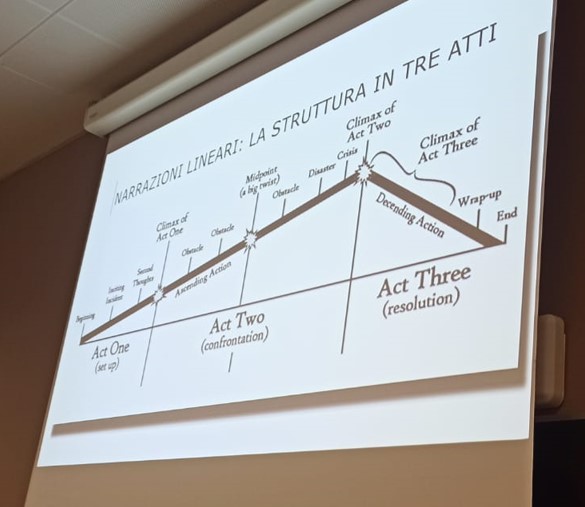
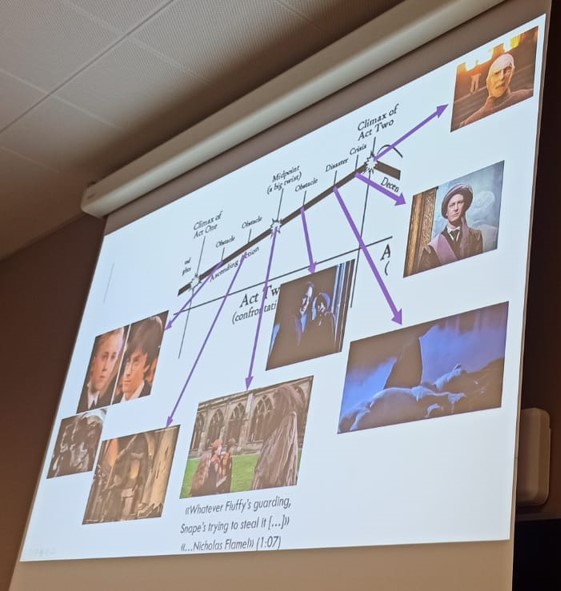
Space. Distant and intangible, yet a mirror of geopolitics. How can the complex web of actors and dynamics of space diplomacy be communicated to the “general public” through the results of space missions and scientific research clearly and engagingly? The art of storytelling—almost as ancient as humanity itself—serves as an effective tool for transferring knowledge and conveying experiences within the framework of Science Diplomacy. The starting point of this storytelling laboratory is a true story: the finest example of space diplomacy during the Cold War. A story that belongs to History itself, the Giotto Mission, the ESA project that accompanied humanity to its encounter with Halley’s Comet, making it possible, on 13 March 1986, for the first time, to observe a comet at close range. After becoming familiar with the “facts” through the traditional tools of History (written sources and oral testimonies, most notably that of the astronomer Cesare Barbieri, scientific articles, and academic lectures), participants in the laboratory are challenged to develop a storytelling project. The information acquired becomes the foundation for constructing an original story in which imagination fills in “what the sources do not say.” Memories, perceptions, and even personal emotions, usually excluded from academic historical narratives, are called upon as a resource. Pursuing the final objective confronts participants with a series of choices, beginning with the definition of the audience and the theme, that is, the message to be communicated. As an additional constraint, participants must compose the new story through theatre, cinema, or comics. The exercise requires translating abstract concepts and values into images and physical actions. Names that appeared only in footnotes acquire a face and a soul, becoming characters. Places often defined solely by their toponym take on material substance. This process of transcodification offers an implicit opportunity to verify comprehension of the original story and stimulates the formulation of new questions and further exploration. The imaginative process thus becomes an opportunity for knowledge. Participants are free to work on the creation of a complete final product on a small scale (a short theatrical or cinematic piece, a brief comic story, an animated cartoon using open-source software) or to describe the project for a more extensive product accompanied by an illustrative sample (e.g., a selection of scenes or a trailer). Introduced and developed through several preparatory online meetings, the laboratory in Erice culminates in a final moment of shared presentation of the projects and products created: when integrated into a narrative structure designed to engage, provoking reactions or eliciting emotions, data acquire accessible meanings, and events rise to the level of achievements. The results may be published on the spacediplomacy.it portal.